
Results
-
 £118.99
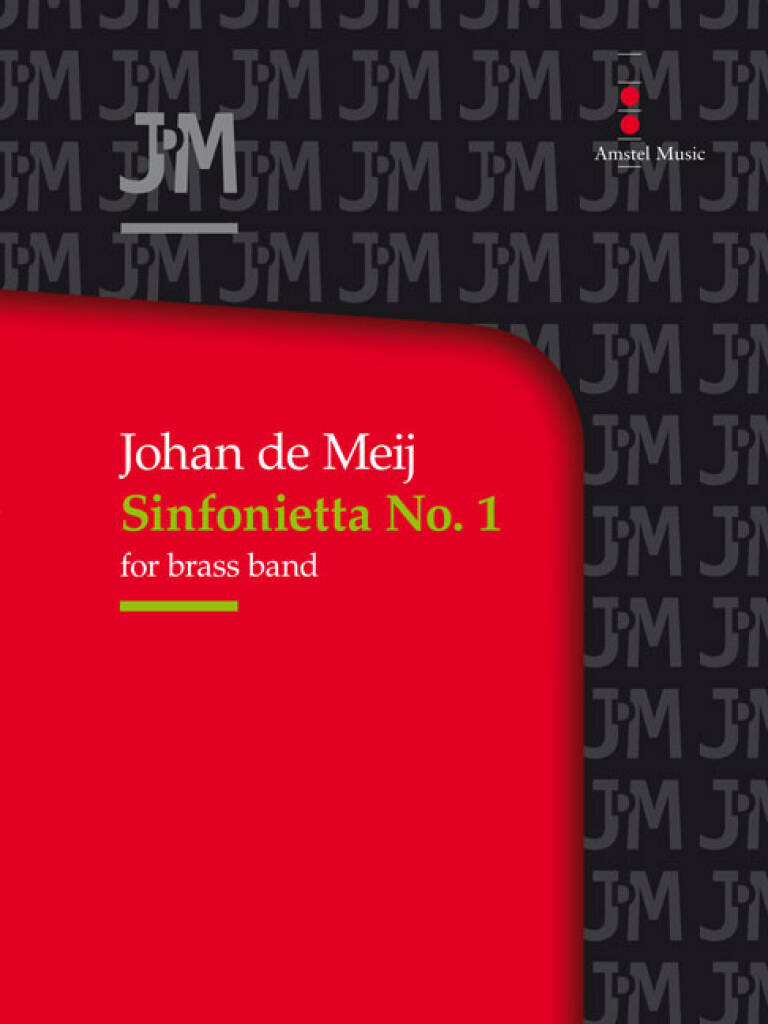
Sinfonietta no. 1 - Johan de Meij
Sinfonietta No. 1, written for brass band, was commissioned by the Dutch National Championships 2011 in Groningen. It also served as the test piece for the Swiss National Championships 2011 in Montreux, Switzerland. Unlike most of Johan de Meij's compositions, Sinfonietta No. 1 is an abstract, non-programmatic work. It consists of three movements, in which the thematic material of the opening measures - an upward fifth jump - returns in various shapes and forms throughout the piece. The slow middle section features solo passages by cello, English horn and bassoon, all starting with the same fifth jump. The final movement presents an Elgar-like march theme,interspersed with quotes from the second movement, and ending with the opening theme of movement I.
Estimated dispatch 5-14 working days
-
 £72.99
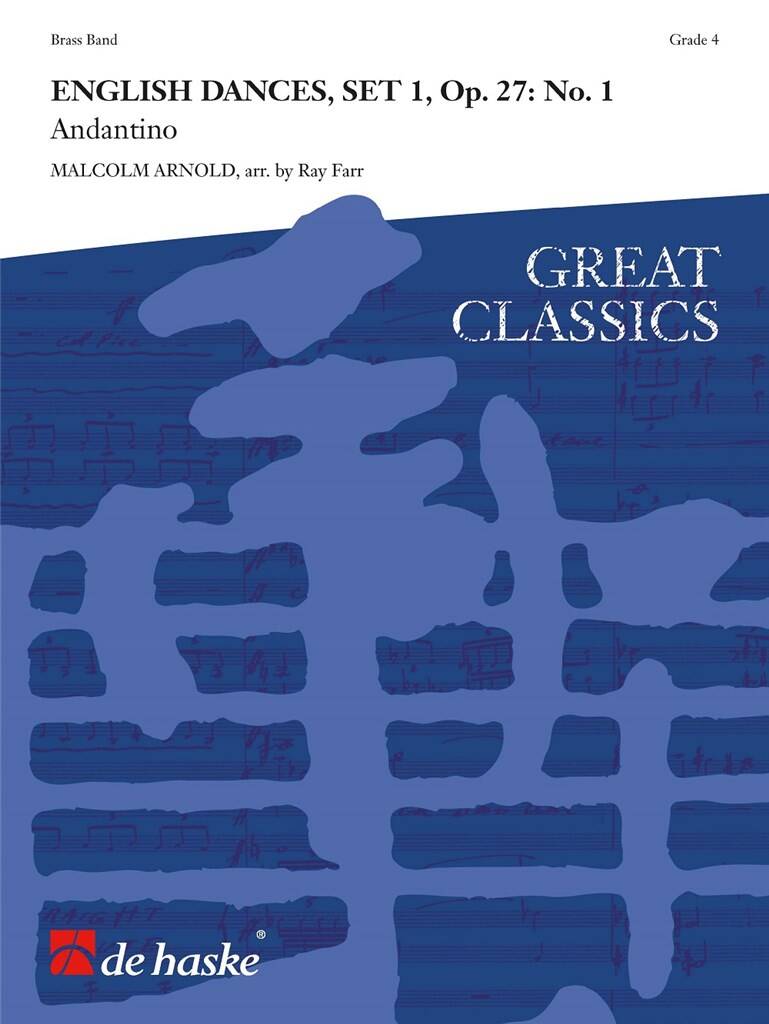
English Dances, Set 1, Op. 27: No. 1 - Sir Malcolm Arnold - Ray Farr
English Dances, Set I, opus 27, is a light classic composition that was written for orchestra by the British composer Malcolm Arnold in 1950. The set contains four dances that continue without pause: the individual movements are indicated by the tempo markings. The work came about at the request of Bernard de Nevers, at the time the head of publisher Alfred Lengnick & Co., who asked Arnold to write a suite of dances as an English counterpart to Dvo ak's Slavonic Dances and Bartok's Romanian Folk Dances. The premiere took place in the spring of 1951, played by the London Philharmonic Orchestra, conducted by Sir Adrian Boult. Following the success of the first set, DeNevers asked the composer to write a second one, which Arnold completed the next year (Op. 33). The Andantino from the first set has been skilfully arranged and orchestrated for brass band by Ray Farr.
Estimated dispatch 5-14 working days
-
 £69.99
As the Deer - Martin Nystrom - Andrew R. Mackereth
As the Deer is a well-known praise and worship song by Martin Nystrom. Written in 1984, this song is based on Psalm 42:1.. "As the hart panteth after the water brooks, o panteth my soul after thee, O God.
Estimated dispatch 5-14 working days
-
 £74.99
Cornet Concerto No.1 - Jonathan Bates
My 'Cornet Concerto No.1' was composed for Lode Violet and Brass Band Willebroek in 2018 and features 2 movements, entitled 'Dystopia' and 'Utopia'. . The nature of the music in the opening section, 'Dystopia', is very jagged, disjointed and unsettling, as the soloist almost battles against the constant churning of the mechanical accompaniment, trying to persevere with it's own ideas and styles without being dragged into conforming to it's surroundings. The movement is based largely on the 3 note interval heard right at the outset of the piece (C, D & G#, a series of notes that lends itself so well to different modes, scales, harmonies and intervals) and this forms much of the rhythmic and harmonic structure of the opening section.Whilst this movement acts as a virtuoso feature to demonstrate the extended capabilities of both the soloist and instrument, I feel the accompanying ensemble plays an equal role in the narrative of 'dystopia', and features a number of demanding and prominent episodes for soloists within the accompanying band. A short and heavy coda concludes the movement, with a sense of real pain and sorrowfulness as the music fades away into darkness. . 'Utopia' opens in an instantly more hopeful nature, with the soloist introducing the first real 'theme' of the movement, taken up shortly by the accompaniment. Throughout this movement, there are a number of timbral and melodic references back to the darkness of 'dystopia', but transformed into a much more positive outlook and soundworld. There is a moment of quiet reflect (using the initial 3 note cell as a basis) before flying head first into a frenzied wild 'tarantella' like section, full of joy and energy which tests the dexterity and light-natured approach to virtuosity (much unlike the heavier material in the 1st movement) of the soloist. Primarily, the concept of this finale is fun - joy, happiness, and freedom from restraint, so the addition of a quirky 'tongue-in-cheek' habanera section offers a brief moment of respite from the craziness of the tarantella. To conclude the work, there is an extended cadenza for the soloist which is built on several motifs heard throughout the concerto, which leads the band into a dramatic and energetic final few bars.. Jonathan Bates. (2018). .
In Stock: Estimated dispatch 1-3 working days
-
 £30.00
O.B.1. Fanfare - Tom Watson
Tom Watson was born into a musical family in Hertfordshire, England and showed a flare for playing the trumpet from the age of just 4. Taught by his father James Watson, the prolific international soloist, conductor, educator and session trumpeter, Tom studied at the Royal Academy of Music, where he gained a first class honours degree. Whilst still at college, Tom embarked on a varied professional freelance-playing career and was guest principal trumpet with the Mahler Chamber Orchestra performing under Claudio Abbado, Daniel Harding, and Sir Neville Marriner. Tom can be regularly found performing and recording with the London Symphony Orchestra, The BBC National Orchestra of Wales and many of the UK's finest orchestras. Commercially, Tom has played in sessions or concerts for artists such as Sir Elton John, Sir Paul McCartney, Sir Tom Jones, Dame Shirley Bassey, Ozzy Osbourne, Phil Collins, Eric Clapton, Joe Cocker, Jarvis Cocker, Pete Doherty, Nick Cave, Karl Jenkins and Victoria Wood. Some of his film session work has included recording the scores for Brave, Eragon and Stormbreaker. Tom also works as a musical director, arranging and conducting various projects such as Tony Christie's album Made in Sheffield and for renowned harpist Catrin Finch. Tom also runs his own independent recording and production company Pro Audio, part of Prozone Music, which Tom owns and runs alongside his brother William. The O.B.1. Fanfare was written for the Harper Ensemble, a brass ensemble comprising of Tom's contemporaries from his time at the Royal Academy of Music. It was written for the Leicester Square UK premiere of the film "Ali" starring Will Smith. Composed as a salute to Hollywood and the big screen, this fine pastiche of film scoring is an ideal fanfare and concert opener.
-
 £0.99
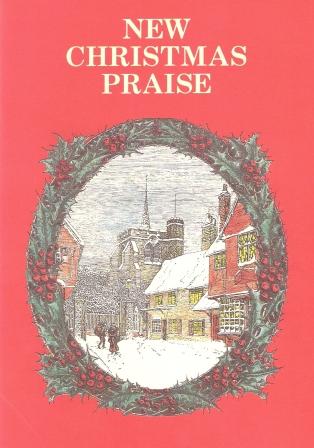
£0.99New Christmas Praise Song Book 1 - 95
These books are now an archive publication and, although are still available, have been superseded by Christmas Collection (available in marchcard size: https://www.sps-shop.com/cc-marchcard or A4 size https://www.sps-shop.com/cc-largeprint). Christmas Collection includes 46 new carols and songs as well as 10 extended carols (originally seen in the Sounds of Christmas books).Ideal for congregational singing.CONTENTS 1. A child this day is born 2. A Christmas Lullaby 3. A great and mighty wonder 4. A starry night 5. A virgin most pure 6. All my heart this night rejoices 7. Angels from the realms of Glory (Come and worship) 8. Angels from the realms of Glory (Iris) 9. Angels, sing again? 10.Angels we have heard on high 11.As with gladness men of old 12. Away in a manger 13. Away in a manger (The manger scene) 14. Bethlehem 15. Brightest and best 16. Brightest and best (Spean) 17. Child of Mary 18.. Calypso Carol 19. Carol for the Nativity 20. Carol of the bells 21.Carol of the drum 22. Christ was born on Christmas Day 23. Christians Awake 24. Come, children, come quickly 25. Coventry carol 26. Do you hear what I hear 27. Ding dong! merrily on high 28. Gabriels message 29. Glory in the highest 30. Go, tell it on the mountain 31. God of God, the uncreated 32. God rest you merry, gentlemen 33. Good Christian men, rejoice 34. Good King Wenceslas 35. Hark the glad sound! 36. Hark! the herald angels sing 37. How far is it to Bethlehem 38. I saw three ships come sailing in 39. I wonder as I wander 40. Il est n 41. Immanuel Appears 42. In the bleak mid-winter 43. Infant Holy 44. It came upon the midnight clear (Traditional) 45. It came upon the midnight clear (Willis) 46. Jesus, good above all other 47. Joy to the world 48. Little baby Jesus 49. Little Jesus, sweetly sleep. 50. Little donkey 51. Long, long ago 52. Marys boy child 53. Masters in this hall 54. Noel 55. o come, all ye faithful 56. o come, Immanuel 57. O come with me to Bethlehem 58. O little town of Bethlehem (Christmas Carol) 59. O little town of Bethlehem (Forest Green) 60. O little town of Bethlehem (St Louis) 61. O Heaven-sent King 62. O holy night 63. Once, in royal Davids city 64. Past three oclock 65. Personent hodie 66. Praise ye the Lord 67. Rise up, shepherd! 68. Sans day carol 69. See, amid the winters snow 70. Silent night! 71. Sleep, holy Babe 72. Softly the night is sleeping 74. Stars are shining 73. Sussex carol 76. Sweet chiming bells 75. Sweet chiming Christmas bells 77. The angels sang the story 78. The first Nowell 79. The holy Boy 80. The holly and the ivy 81. The infant King 82. The shepherds farewell 83. The virgin Mary had a baby boy 84. The stable door 85. They all were looking for a king 86. Three kings march 87. Unto us a boy is born 88. Wayfaring 89. We gather round the manger-bed 90. We three kings of Orient are 91. What child is this 92. When wise men came seeking 93. While shepherds watched 94. Who is he 95. Zither carol
Estimated dispatch 7-14 working days
-
 £30.00
Finale from Tosca, Act 1 (Te Deum)
DescriptionPuccini's opera Tosca, one of his most successful and popular works is set in 1800 in Rome, as Napoleon's invading army is approaching. There are rebels in Rome who see Napoleon as a liberator from Neapolitan rule and are plotting secretly. One of those is the young firebrand artist Cavaradossi. He and his lover, the beautiful and tempestuous Tosca, are being pursued by the evil chief of the secret police, Scarpia. At the end of Act 1, Scarpia is revelling in his plot to capture Cavaradossi and trick Tosca into sleeping with him to buy her lover's freedom, all inside a church in Rome while a Te Deum service is being sung; in the background the bells are tolling and we hear distant cannonfire from the approaching army.In this arrangement the part of Scarpia is played mostly by the solo trombone. There is an optional organ part, although all of the organ part is covered in the band parts.This arrangement was first performed by the Harrogate Band conducted by Andrew Baker in 2022. Watch a video preview of the score below!
Estimated dispatch 7-14 working days
-
 £29.95
Scherzo No. 1 - Jonathan Bates
DURATION: 2'30". DIFFICULTY: 1st+. 'Scherzo No.1 (Sanguine)' was composed for the Reg Vardy Band's 2019 Brass in Concert Championships programme, which revolved around the 4 temperaments of Human Nature - a theory by the Greek philsopher Galen from 450 BC. Sanguine individuals are defined as being optimistic or positive, especially in an apparently bad or difficult situation. An extrovert, and someone that looks for the good in situations. They bring energy into a room and brighten people's life with their humour and cheerful nature. It is upon this definition which Scherzo No.1 is composed, with an optimistic and cheery feel to the music, with small interjections of anger and sadness soon giving way to the more upbeat music surrounding it. .
In Stock: Estimated dispatch 1-3 working days
-
£250.00
Symphony No 1 for Wind Band - Solitude Standing - Stig Nordhagen
The two movements in this symphony have quite similar structure and length, and this is no coincidence.As a composer, I try to create two musical stories that comes from the same starting point and thought, but they sound and feel different.Music often describes something you cant say in words. This composer stands in the middle of the symphony, here personalized as trombone solo (or euphonium) and tries "Solitude Standing" to make a bridge between the two parts.- Stig Nordhagen -
Estimated dispatch 7-14 working days
-
 £15.00
Pomp and Circumstance No. 1 (Land of Hope and Glory) - Elgar
Performance Notes by Andrew Duncan:This fine march theme is arranged in two distinct parts.From the beginning up to two bars before letter C the melody is played quietly with the Horns carrying the tune - the Horns have to play up to a high F in this section. If this is not something that your band can manage then you have two options of where you can start playing the arrangement from.If your band can manage the chromatic notes, then begin playing from two bars before letter C. Alternatively, simply start playing directly from letter C .The musical concepts of Rallentando and A tempo are encountered in this arrangement. These can be difficult concepts for inexperienced players to grasp, so playing this arrangement should help to establish this technique.The Flexi-Collection ApproachFlexible scoring tailored to your needs - A perfect solution for expanding the repertoire of training and junior brass bands. The Flexi-Collection currently offers two series - Popular Classics and World Tour. Based on four-part harmony, these collections provide groups with the advantage of complete flexibility when they may not be balanced. If players or instruments are missing, the show can still go on!The Flexi-Collection - Popular Classics Series, encapsulates all that is great about the wonderful range of musical styles produced by Holst, Elgar, Handel, Verdi, Tchaikovsky, Grieg, Bizet and Parry.The thoughtful scoring and arranging by Andrew Duncan now means that groups of all abilities have access to a truly flexible set of music for their needs. With world parts, rudimentary theory, terminology translations and large format typesetting, The Flexi-Collection ticks all the boxes when it comes to bringing interesting music to the training and junior band/brass group environment.Available individually or as part of the money-saving Flexi-Collection Popular ClassicsAlbum.Scored for Brass Band and supplied with additional Easy Bb, Easy Eb and world parts - The Flexi-Collection offers flexibility in every sense of the word.
In Stock: Estimated dispatch 3-5 working days
 View Music